Whale Watching Season in Puerto Vallarta: When to Go and Where to Stay
[13-MINUTE READ]
Every December, humpback whales begin arriving in Banderas Bay after a months-long migration from their feeding grounds in Alaska and British Columbia. They come to breed, give birth, and nurse their calves in warm, sheltered water. By the time February rolls around, the bay can hold hundreds of these animals at once. If you time your visit right, you might watch a 40-ton humpback breach completely out of the water less than a quarter mile from your boat, close enough to feel the impact when it lands.
That's not a rare occurrence here. Banderas Bay is one of the most reliably productive whale watching destinations in the world, and the reason comes down to geography. The bay is one of the largest in the Americas, measuring roughly 40 kilometers wide and dropping to depths that exceed 1,000 meters near its center. That combination of warmth, depth, and protection from open-ocean swells creates conditions that humpbacks return to year after year. For travelers willing to plan a few days around the season window, the reward is an experience that's genuinely difficult to replicate anywhere else in Mexico.
This guide covers everything you need to know before you book: when the whales arrive and leave, what behaviors you can expect to see at different points in the season, how to choose a reputable tour, and why a resort stay at Hard Rock Hotel Vallarta puts you closer to the action than nearly any other address in the region.

What You'll Learn
- Exactly when puerto vallarta whale watching season runs and which weeks offer peak activity
- Why Banderas Bay draws humpbacks in such large numbers each winter
- What to look for on a tour and how behavior changes as the season progresses
- How to choose a responsible, well-run whale watching operator
- What common mistakes cause travelers to miss the best sightings
- How staying at Hard Rock Hotel Vallarta simplifies the entire experience
Why Banderas Bay Is One of Mexico's Best Whale Watching Locations
The Geography Behind the Migration
Humpback whales that feed in the cold, krill-rich waters of the North Pacific begin their southward migration in late fall. Pregnant females lead the movement, driven by the need to give birth in water warm enough for newborns to survive. Banderas Bay sits at roughly 20 degrees north latitude, which puts its water temperature between 22 and 26 degrees Celsius during winter months. That's the sweet spot humpbacks seek.
The bay's exceptional depth is the second factor. Humpbacks are deep-diving animals, and the submarine canyon system beneath Banderas Bay gives them room to move vertically as well as horizontally. Surveys conducted by researchers from the Universidad de Guadalajara and collaborating institutions have documented consistent year-over-year returns of individually identified whales, which confirms that this is a learned migratory destination passed down through generations.
What Makes This Population Special
The Eastern North Pacific population of humpback whales that uses Banderas Bay is one of the most extensively studied in Mexico. Local researchers have built photo-identification catalogs spanning decades, using unique fluke (tail) patterns to track individual animals across multiple seasons. Some of the same whales have been photographed in the bay 15 or more years apart, which speaks to the stability and importance of this location in their annual cycle.
For visitors, this population density translates into something practical: tour boats in Banderas Bay frequently encounter multiple whale groups within a single two-hour excursion. On a good day in peak season, sightings are nearly guaranteed.
Understanding the Puerto Vallarta Whale Watching Season Month by Month
December: The Season Opens
The first humpbacks typically enter Banderas Bay in late November, and by early December sightings become consistent enough that tour operators begin regular departures. December is considered the early season. The whales present during this period are primarily pregnant females seeking sheltered water before giving birth, and adult males beginning competitive behaviors for mating opportunities.
Sightings in December are good but not at their statistical peak. Groups tend to be smaller, and the really dramatic surface behaviors like full breaches and extended pec-fin slapping are less frequent than they'll become in January and February. That said, December offers one genuine advantage: fewer tourists competing for tour spots, which means more flexibility in booking.
January and February: Peak Season
January through mid-February is when Banderas Bay becomes most active. Newborn calves are present alongside their mothers. Adult males form "escort" groups, sometimes involving three to five animals competing for proximity to a single female. These competitive pods move fast, vocalize constantly, and produce the most dramatic surface activity of the entire season.
This is the window where full breaches happen most often. Researchers believe breaching during this period serves both as a display for potential mates and as a way for competitive males to signal size and vigor. Whatever the cause, watching a humpback launch its full body into the air is something that stays with you. January and February are when that's most likely to happen.
March: The Season Winds Down
By early March, the population in Banderas Bay begins to thin as animals start their northward return. Mothers with calves tend to linger longest, sometimes remaining into mid-March as calves build the strength and fat reserves needed for the long migration north. Sightings in March are still possible and can be beautiful, particularly because calf activity (playful surface behaviors, calves swimming near the boat) is still common.
After mid-March, sightings become sporadic and tour operators begin reducing departure frequency. If whale watching is a priority for your trip, don't rely on late March as a fallback date.
Quick-Reference Season Overview
| Month |
Whale Presence |
Activity Level |
Crowd Level |
Best For |
| Late November |
Arriving, sparse |
Low |
Low |
Early explorers |
| December |
Building |
Moderate |
Low to moderate |
Flexibility, value |
| January |
Peak density |
High |
High |
Breaches, competitive pods |
| February |
Peak density |
Very high |
High |
Calves, dramatic displays |
| Early March |
Declining |
Moderate |
Moderate |
Mother-calf pairs |
| Mid-March onward |
Sporadic |
Low |
Low |
Not recommended as primary goal |
What to Expect on a Whale Watching Tour in Banderas Bay
Typical Tour Format
Most whale watching tours in vallarta resort whale watching depart from either Marina Vallarta or the Nuevo Vallarta marina, with trip duration ranging from two to three hours. Boats range from small pangas carrying eight to twelve passengers to larger vessels with shade decks and onboard naturalists. Both formats produce good sightings; smaller boats can maneuver more quickly and often get closer to surface activity, while larger boats offer more comfort for guests prone to seasickness.
Most responsible operators follow the Mexican federal guidelines (NOM-131) governing whale watching, which set minimum approach distances (50 meters for most vessels) and prohibit actively pursuing or surrounding animals. When choosing a tour, ask explicitly whether the operator follows NOM-131. A naturalist guide on board is a positive sign, as it indicates the company invests in education rather than just transportation.
Reading Whale Behavior on the Water
Knowing what you're looking at changes everything. A blow, the column of vapor expelled when a whale surfaces to breathe, is almost always your first sign. Humpback blows can reach four to six meters high and are visible from a long distance on a calm day.
After the blow, watch for the sequence of the dive. A low, rolling surface without a fluke lift means the whale is swimming shallow and may resurface nearby. A high fluke lift before diving means the animal is going deep, and you'll wait several minutes before seeing it again. If you see multiple blows clustered together and the boat captain accelerates, a competitive pod is likely nearby.
Breaching typically happens without much warning. The best strategy is to keep your eyes on the water rather than on your phone camera settings. A breach lasts about three seconds from first emergence to splash. You'll hear it before you see photographs of it clearly.
Photography Practical Tips
Bring a camera with a fast shutter speed capability. On a boat in open water, image stabilization matters more than focal length. A shutter speed of 1/1000 second or faster is necessary to freeze a breach. Many experienced wildlife photographers recommend shooting in burst mode throughout any surface activity rather than waiting for what looks like "the moment."
Mornings offer the best light for photography in Banderas Bay. Most tours depart between 8:00 and 10:00 a.m., which aligns well with both optimal lighting and the period when whales tend to be most active before midday heat settles in.
Choosing the Right Tour Operator
What Separates Good Operators from Great Ones
The single most useful filter when comparing operators is whether they employ a trained naturalist guide. A guide who can read animal behavior in real time, position the boat appropriately, and explain what's happening as it unfolds transforms the tour from a boat ride into something genuinely educational.
Second, look for operators who prioritize fewer passengers per vessel. A group of eight gets a fundamentally different experience than a group of forty, particularly when the boat needs to reposition quickly during active surface behavior.
Red Flags to Avoid
Be cautious of any operator who guarantees a sighting. While Banderas Bay sightings are highly reliable during peak season, no reputable operator makes guarantees because wildlife is, by definition, unpredictable. Overpromising is a sign that marketing matters more to that company than accuracy.
Also avoid tours that advertise their proximity to whales in ways that suggest they'll push past approach limits. Harassment of humpbacks, even unintentional, disrupts behaviors that are important for mating and calf development. The most memorable tours are not the ones where the boat came closest; they're the ones with the most sustained, natural animal activity.
Staying at Hard Rock Hotel Vallarta: The Best Base for Whale Watching Season
Location Advantages for Whale Watchers
Hard Rock Hotel Vallarta sits directly on Banderas Bay in Nuevo Vallarta, roughly 15 minutes north of Marina Vallarta by car. The Nuevo Vallarta marina, from which several highly regarded whale watching operators depart, is less than five minutes from the hotel. This proximity matters more than it might seem: early morning tour departures (8:00 a.m. is standard) require minimal commute, and you won't be fighting downtown traffic while still half-asleep.
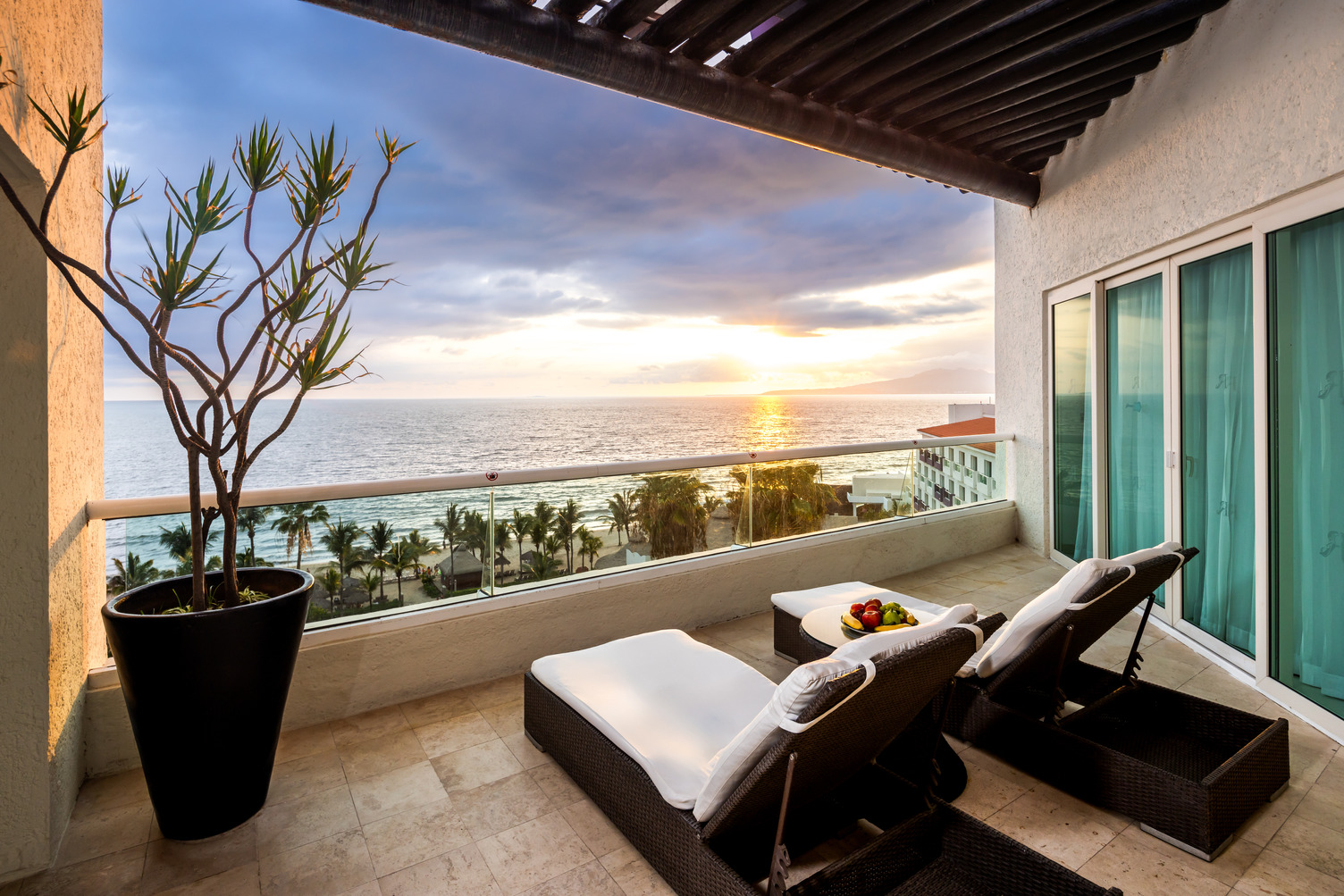
The hotel's beachfront location also means that during peak season, you may spot whale blows and even distant breaches directly from the beach. This isn't a marketing claim; guests staying in beachfront-facing rooms during January and February regularly report watching humpbacks from their terraces. It doesn't replace a tour, but it does mean the season surrounds you from the moment you arrive.
All-Inclusive Logistics That Actually Help
The all-inclusive model at Hard Rock Hotel Vallarta removes a specific friction point that whale watching travelers often face: early morning logistics. A 7:30 a.m. breakfast before heading to the marina doesn't require finding an open restaurant in town or prepaying for a meal you might miss. The kitchen serves full breakfast from early morning, which means you leave for the marina fed, hydrated, and on time.
When you return from a tour (often by noon), the beach, pools, and food service are immediately available. The contrast between the intensity of spending two hours on the water watching one of the world's largest animals and then moving directly to a cold drink by the pool is, frankly, one of the best parts of planning this kind of trip properly.
On-Site Concierge Tour Assistance
The concierge team at Hard Rock Hotel Vallarta can assist with booking whale watching tours directly. This is worth using not because it's convenient (though it is), but because the team has firsthand relationships with local operators and can steer you toward companies with strong safety and naturalist records. During January and February, tours fill quickly. Booking through the concierge as soon as you've confirmed your travel dates gives you the best shot at your preferred departure time.
Common Mistakes and Myths About Puerto Vallarta Whale Watching Season
Myth: Any time between November and April will give you roughly equal sightings. Not accurate. The difference between December and peak January/February in terms of activity level is significant. If whale watching is a primary reason for your trip, book for January or early February.
Mistake: Booking the cheapest tour available. Lower price almost always reflects fewer staff, older equipment, larger passenger groups, or operators who aren't following approach guidelines strictly. On a two-hour experience that you may have planned a trip around, saving $20 on the tour is not worth the tradeoff.
Myth: Larger boats are safer and better. Safety standards among licensed operators are comparable regardless of vessel size. Smaller, well-maintained boats often produce better experiences because they can reposition quickly when activity occurs.
Mistake: Planning whale watching as an afternoon activity. Most tour operators prioritize morning departures for a reason. Surface activity is generally higher in the morning hours. If you can only do one departure, book the earliest available slot.
Myth: You'll definitely see dolphins too, so that's a bonus if the whales are quiet. Common bottlenose and spinner dolphins do frequently appear in Banderas Bay, sometimes riding bow waves. But treating dolphins as the consolation prize misses the point. The humpback experience in this bay during peak season is so consistently spectacular that planning around it specifically makes sense.
Frequently Asked Questions
When is the best time for whale watching in Puerto Vallarta?
The best window is January through mid-February. Whale density is at its highest, newborn calves are present, and competitive male behavior produces the most dramatic surface activity of the season.
What kind of whales can you see in Banderas Bay?
Humpback whales are the primary species, and they're present in large numbers. Occasionally, orca (killer whales) are spotted in the bay, though sightings are unpredictable. Bottlenose dolphins appear frequently year-round.
How long does a typical whale watching tour last?
Most tours run two to three hours. Departure times are typically between 8:00 and 10:00 a.m. from Marina Vallarta or Nuevo Vallarta marina.
Is whale watching in Puerto Vallarta appropriate for children?
Yes. The bay is generally calm, and most operators welcome families. Children old enough to follow basic boat safety instructions (typically 5 and older) handle the experience well. Motion sickness medication is worth considering for younger children or anyone prone to seasickness.
What should I bring on a whale watching tour?
Sunscreen, sunglasses, a light jacket (the boat creates wind even on warm days), a camera with a fast shutter speed, and any motion sickness medication if relevant. Leave large bags in your room; space on smaller boats is limited.
How far in advance should I book a tour during peak season?
For January and early February departures, booking at least one to two weeks in advance is wise. Prime morning slots with popular operators sell out, particularly over holiday weekends.
Can you see whales from the shore in Puerto Vallarta?
Occasionally, yes. During peak season, blows and distant breaches are sometimes visible from elevated beachfront positions, particularly in the morning. However, shore sightings are unpredictable and don't substitute for a boat tour.
Is Hard Rock Hotel Vallarta close to whale watching tour departures?
Yes. The hotel is located in Nuevo Vallarta, approximately five minutes from Nuevo Vallarta marina by car. The concierge team can assist with tour booking and arrange transportation to the marina.
The Bottom Line
Puerto Vallarta whale watching season is one of those travel experiences where the timing genuinely determines the outcome. Book for January or early February, and you're placing yourself in the middle of one of the most productive humpback whale habitats in the Americas during its most active period. Book for late March as an afterthought, and you're rolling the dice on a season that's effectively over.
Staying at Hard Rock Hotel Vallarta positions you well for the entire experience. The hotel's location on Banderas Bay, its proximity to Nuevo Vallarta marina, the all-inclusive format that handles early morning logistics cleanly, and the concierge access to reputable local operators all work together to remove the friction that can make wildlife travel more complicated than it needs to be. You came to watch humpbacks breach in the bay. The hotel is built around a beach that faces that same bay.
Ready to plan your trip? Visit Hard Rock Hotel Vallarta to check availability during peak whale watching season, or reach out to the concierge team to start planning your tour before the best January and February slots fill up.

